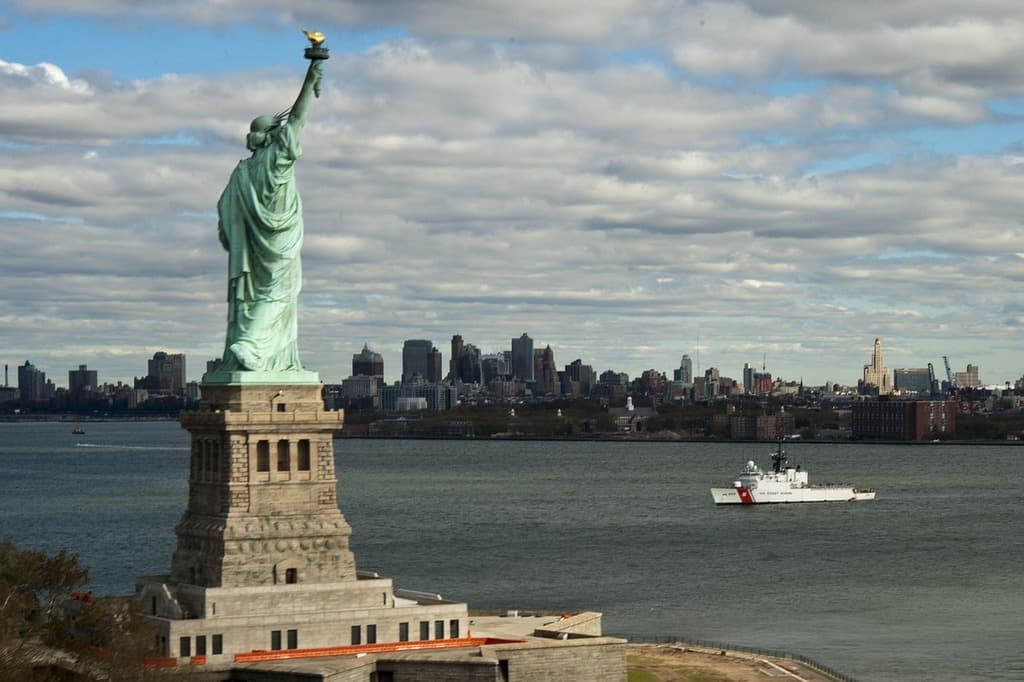


Detailed Timeline of the Statue of Liberty
History of the Statue of Liberty

The history for the Statue of Liberty started in 1865 when Edouard de Laboulaye proposed a grand gift from France to the US to honour the Declaration of Independence. He admired the US for ending slavery, which reflected its value of freedom. Frederic Auguste Bartholdi then began designing the statue, which was named "Liberty Enlightening the World”. It had a crown with sunray spikes and a tablet marking American independence.

In 1877, France took on the task of building the Statue of Liberty, while the US was responsible for funding and building the pedestal. Then, money was raised in France through public fees, entertainment, and a lottery. In the US, people held events, art shows, and auctions to collect funds. Joseph Pulitzer helped by urging people to donate through his newspaper and promising to print their names. This helped to complete the funding of the statue.

According to the Statue of Liberty history, the original torch was made of copper and designed to shine brightly, but it was modified several times. Until 1880, leaks and corrosion made it unstable, so it was replaced with a new torch based on Bartholdi’s design. In 1916, copper parts were replaced with glass and a new lighting system was added in 1931. The original torch is now showcased at the Statue of Liberty Museum.

In 1885, the Statue of Liberty was disassembled into about 350 pieces and shipped to New York in over 200 crates. It arrived on 17th June 1885 and was stored on Bedloe’s Island while the pedestal was being built. The pedestal was finished in April 1886, and President Grover Cleveland dedicated the statue on 28th October 1886.

The history for Statue of Liberty states that it was officially announced on 28th October 1886. A dedication ceremony took place on Liberty Island in New York Harbor. There, President Grover Cleveland revealed the statue in front of dignitaries and thousands of people. This event featured speeches, a parade, a cannon firing, and the release of pigeons to spread the news.
The Statue of Liberty Today

- The Statue of Liberty's history proves that it is a powerful symbol of political freedom and democracy.
- In 1984, the statue was named a World Heritage Cultural Site.
- Today, it welcomes millions of immigrants and offers hope and opportunity to people looking for a new life in the United States.
- The remarkable importance of the Statue of Liberty's history identifies it as an iconic landmark that draws visitors from different parts of the world.
- If you visit New York City, seeing the Statue of Liberty is a must-do experience.
FAQs
What is the historical significance of the Statue of Liberty?
The Statue of Liberty history shows it as a symbol of freedom and friendship between France and the US. It celebrates the end of slavery after the US Civil War. This statue in New York Bay represents hope and liberty for all people.
What are some interesting facts about the history of the Statue of Liberty?
An interesting fact about the Statue of Liberty's history is that it was named after Libertas, who is a Roman goddess of freedom. The statue was built to represent freedom and to remind people of the strength and determination of Americans.
How old is the Statue of Liberty?
The Statue of Liberty is 137 years old and its idea began in 1865. It was built between 1875 and 1884 in France. The statue then arrived in New York City in 1885 and was dedicated on 28th October 1886.
How long did it take to build the Statue of Liberty?
The Statue of Liberty took about 10 years to build. Its construction work started in 1875 in France and finished in 1884. After that, it was shipped to New York City, where it was set up in 1886.
When was the Statue of Liberty built?
The Statue of Liberty history shows that it was built between 1875 and 1884 in France. It was shipped to New York City in 1885 and dedicated on 28th October 1886. The idea started in 1865, and the statue has been a symbol of freedom ever since.
Who built & designed the Statue of Liberty?
The Statue of Liberty was built and designed by French sculptor Frédéric-Auguste Bartholdi. His design and work made the statue a famous symbol of freedom and friendship between France and the United States.
Who was the Statue of Liberty modeled after?
In the Statue of Liberty history, the statue was modeled after the Roman goddess Libertas, who represents freedom. The sculptor, Frédéric-Auguste Bartholdi, drew inspiration from large statues found in Nubian tombs. He also used his mother’s face as a model for Lady Liberty.
What is the Statue of Liberty famous for?
The Statue of Liberty is famous for being a powerful symbol of freedom. It was a gift from France to the United States to celebrate their friendship from the American Revolution. It stands as a welcoming sign for newcomers and represents the values of liberty and hope.
What does the Statue of Liberty symbolize?
The Statue of Liberty symbolizes freedom and opportunity. According to the Statue of Liberty history, it represents the friendship between France and the United States after the American Revolution.